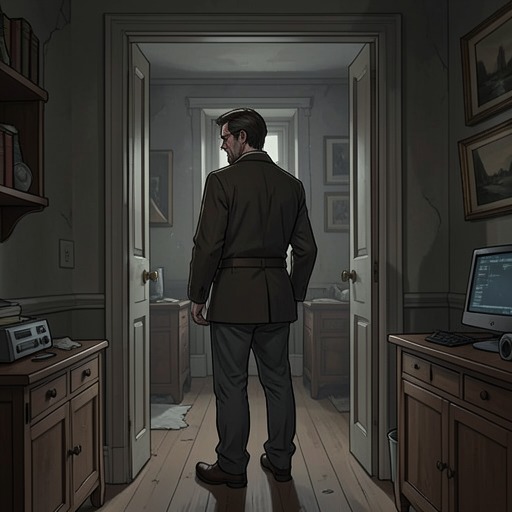
Quinn kills Pasai
Blood CanticleQuinn killing Patsy is recalled as the violent turning point after which Quinn Blackwood met Lestat beneath an oak near the cemetery. In Lestat’s memory, that meeting carries both the grief of what had happened and the beginning of a bond formed through blood, trust, and Quinn’s resolve to understand his transformation.
The Killing and Its Aftermath
Lestat remembers meeting Quinn alone beneath the oak closer to the cemetery gate after Quinn had killed Patsy. The account identifies the act and its immediate aftermath, but does not describe how the killing occurred or supply further circumstances surrounding it.
The defining emotional context is Patsy’s hatred of her son. Lestat recalls it as the most intense hatred he had witnessed directed at anyone: Patsy had placed all the hatred her soul could offer upon Quinn. Against this, he sets his own mother’s response to him after he gave her the Blood: she was largely uninterested in him. Indifference, in Lestat’s comparison, is fundamentally different from the consuming hostility Patsy directed at Quinn.
Lestat’s Recollection of Quinn
The memory returns while Lestat is heading to his oak to look over the cemetery and chapel. He reflects that he lives across past, present, and future, and the landscape prompts him to recall the earlier meeting. The scene is therefore presented not as a continuous account of the killing, but as a recollection that gives the aftermath renewed meaning.
At that meeting, Lestat gave Quinn his own blood to drink. He remembers the exchange as intimate, sad, and thrilling, and as a conveyance of power. For a brief time, Quinn belonged to him; Lestat had seen in him a complex, trusting soul. After the Dark Trick had taken that former self from him, Quinn emerged as a bold, unyielding survivor, determined to make sense of what had happened.
Consequence and Significance
The recollection links Quinn’s killing of Patsy to the vulnerable encounter that followed, without treating the exchange of blood as a simple rescue or erasing the loss behind it. Lestat’s description holds sorrow and exhilaration together: the meeting becomes an intimate bond, but also a passage of power and a recognition of the changed person Quinn had become.
Lestat’s later reflection makes the attachment notably free of possessive desire. He says that loving Quinn came easily, without fierce want or a sense of emptiness. Seeing Quinn find fulfillment with Mona mattered to him more than blood lust. In this account, Quinn’s story moves from the extremity of Patsy’s hatred toward a surviving self capable of trust and a life of his own.